
Mothical communications
The flower senses a moth is near, knowing when they are most active. When the moth beats its wings the flower opens. Signals are sent to the moth, knowing where it is and if it was pollinated.
The shape of the flower positions the moth, how the slow beat of the wings draws out more of the pollen. This while also revealing what beauty a flower holds, colors we can't perceive.


Flowers and insects communicate through colors beyond our visible spectrum, chemical systems, static electricity, and both have adapted to these systems. We want to show how flowers and insects in this case moths communicate, exposing this hidden world of communication. Incorporating a simplistic style of bio-mimicry of both the flower and the moth.
We wanted to focus on moths, as they do a large part of the pollination work at night. These creatures are responsible for a significant and often underestimated amount of pollination, influencing each other through chemicals as well as shape. A night-blooming flower might open later in the evening.

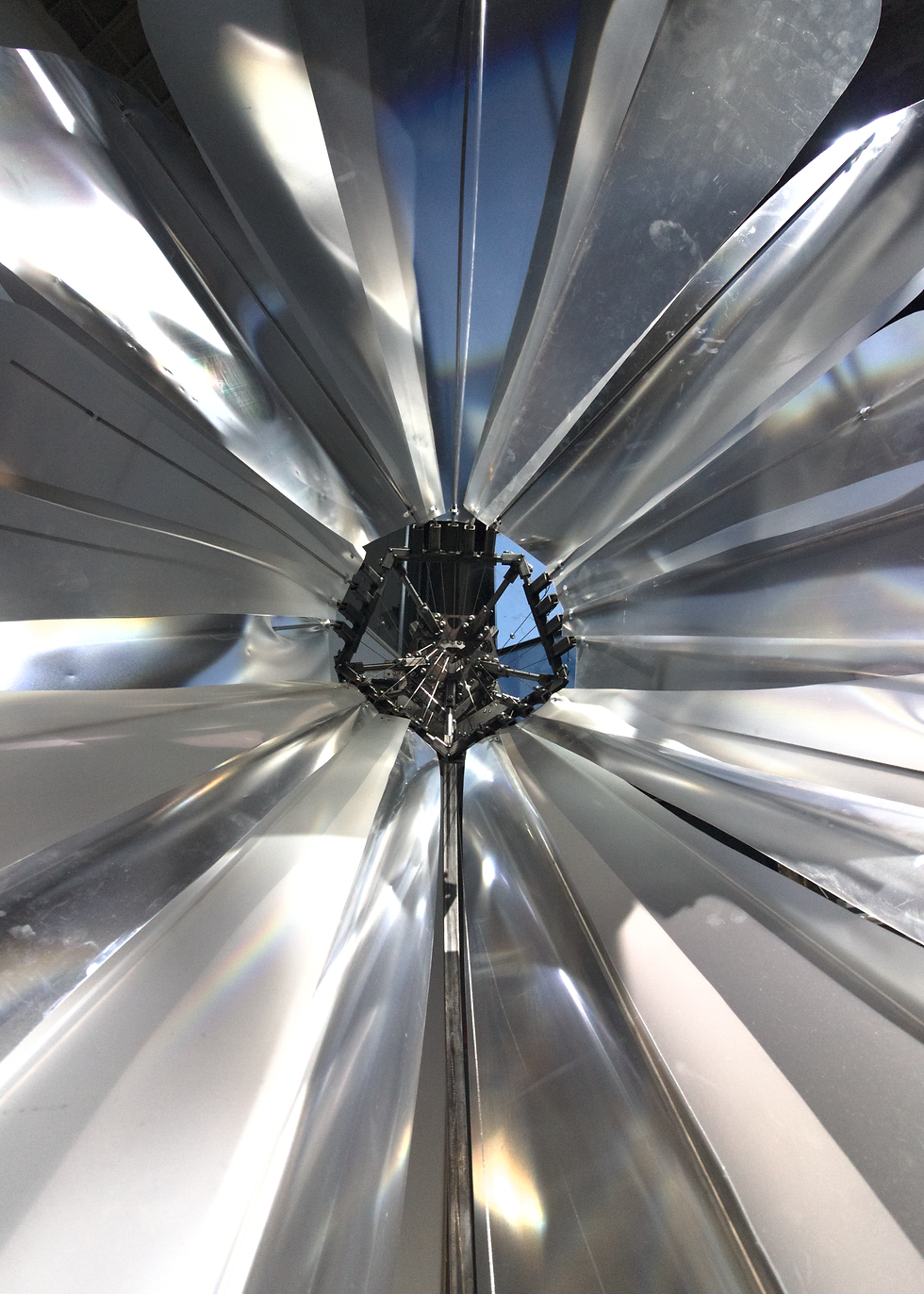

A lot of moth-pollinated flowers are shaped in such a way that they guide the moth into a certain position, allowing the pollen to be transferred as effectively as possible. A great example of this is the hawkmoth, which pollinates flowers that have evolved to take advantage of the frequency at which the moth flaps its wings.
This wingbeat can also create a static electricity charge around the flower. Pollinators are able to detect these changes in electric fields, helping them sense whether another insect has recently visited the flower.
These flowers also change their chemical signals during nighttime to effectively attract more moths, while the air movement caused by the moths helps disperse those chemical signals even further. There is also evidence suggesting that flowers attracting moths have a stronger static electricity field, as at night there are little to almost no visual cues for moths to rely on.
Before the sun sinks away and the dark creeps in, these flowers shine with vibrant colors not visible to us. Showing intricate patterns and almost psychedelic colors, they stand out clearly from the surrounding vegetation. Using ultraviolet light makes them significantly more noticeable for moths and other insects.